
When the Dead Cannot Defend Themselves: The Kantanka Dynasty Fractures Over Interpretation, Power, and the Question of What a Will Actually Means
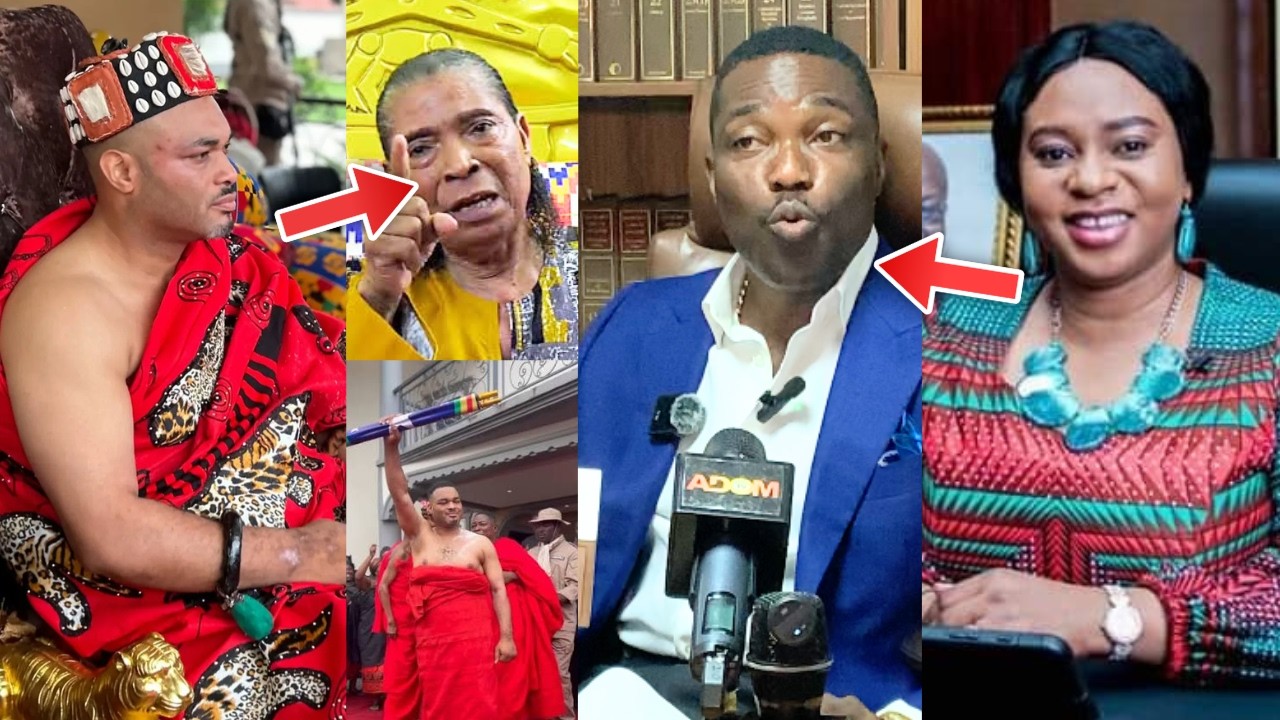
The funeral had not yet taken place when the lawyers arrived.
This is often how it happens in cases of significant wealth and contested succession: the body is barely cold before the legal machinery begins to grind, before the documents are scrutinized, before the ambiguities in language become battlegrounds where competing claims to power are fought.
Apostle Dr. Kwadwo Safo Kantanka left behind a will, a document that he presumably believed would settle matters, that would provide clear direction for his successors and prevent the kind of chaos that often follows the death of a powerful figure.
Instead, the will has become the center of a legal and familial storm, with Adwoa Safo, one of his daughters, and her legal team challenging the very foundations of what the document purports to establish.
The core dispute is deceptively simple on its surface but reveals profound complexities when examined closely.
Adwoa Safo’s lawyer argues that the will does not actually designate Akwasi Safo (also known as Aka or Israel) as the leader of the Kristo Asafo Mission of Ghana.
Rather, it designates him as the head of the family, a fundamentally different role with different implications and different limitations.
This distinction might seem like a matter of semantics to the untrained ear, but in the context of organizational governance and legal authority, it is the difference between everything and nothing.
A head of family is a patriarch, someone who oversees family affairs, who makes decisions about family property and family relationships.
A leader of a church is something altogether different: someone who holds spiritual authority, who makes decisions about doctrine and practice, who controls the organization’s resources and direction.
The lawyer’s argument is that these are separate roles, governed by separate rules, and that the will conflates them in a way that is legally and organizationally problematic.
Furthermore, the lawyer contends that even if the will did intend to designate Akwasi Safo as church leader, such a designation would have to be ratified by the church’s governing body, the council of elders.

The will, in other words, cannot unilaterally determine church leadership; it can only express a preference or a recommendation, which the church’s proper governing structures must then evaluate and either accept or reject.
This argument introduces a crucial element into the dispute: the question of how authority is actually constituted and transferred in an organization.
Kantanka may have believed that his will was sufficient to determine his successor, that his authority was so complete that his written word would be binding on the organization after his death.
But the lawyer is arguing that organizations have their own governance structures, their own procedures for selecting leaders, and that these cannot be overridden by a single individual’s testament, no matter how powerful that individual was during his lifetime.
The lawyer then raises a more troubling issue: the matter of constitutional amendment.
He argues that the will was written at a time when Akwasi Safo may have been the designated successor according to the church’s constitution.
However, the constitution has since been amended, and these amendments have removed the provision that made Akwasi Safo the automatic successor.
If this is true, it means that the will is based on a legal framework that no longer exists, that the conditions it presupposes have changed, and that therefore its provisions regarding succession may no longer be valid or applicable.
This is a sophisticated legal argument, one that requires understanding not just what the will says but what the legal and organizational context was when the will was written and how that context has changed since.
It is the kind of argument that would normally be made in a courtroom, with lawyers on both sides presenting evidence and counter-arguments, with a judge ultimately deciding which interpretation is correct.
The fact that this argument is being made publicly, through media channels, suggests that the dispute has already moved beyond the realm of private family negotiation and into the public arena, where it becomes not just a legal matter but a matter of public interest and public opinion.
The lawyer also raises the specter of attempted murder, mentioning a shooting incident directed at Adwoa Safo.

This is a jarring introduction of criminal violence into what might otherwise be understood as a straightforward dispute over inheritance and succession.
The lawyer’s point seems to be that this is not merely a family disagreement that can be resolved through negotiation or mediation; there are serious criminal matters at stake, matters that fall under the jurisdiction of the state and that suggest a level of hostility and danger that goes far beyond typical inheritance disputes.
The introduction of this element raises questions about the safety of the parties involved, about whether there are threats or violence being used to influence the outcome of the dispute, and about the role of law enforcement in ensuring that the legal process can proceed without intimidation or harm.
The comments on the video reveal the deep divisions that the dispute has created, not just within the family but within the broader community that follows Kantanka’s work.
Some commenters defend Akwasi Safo, arguing that he devoted his entire life to serving his father, that he was always driving his father’s cars and managing his father’s businesses, while Adwoa Safo was pursuing her own dreams and was not as involved in the family enterprises.
From this perspective, the will is simply recognizing what was already true: that Akwasi Safo was the one who actually carried on his father’s work and therefore deserves to inherit the leadership.
Other commenters are more skeptical, suggesting that the lawyer has a point, that there is a difference between family leadership and church leadership, and that the will may not be as clear or as binding as Akwasi Safo’s supporters claim.
Still others seem to view the entire dispute as unseemly, as a betrayal of Kantanka’s memory, as an example of how wealth and power inevitably create conflict and division among those left behind.
What is striking about the dispute is how it reveals the gap between what Kantanka may have intended and what the law actually requires.

Kantanka appears to have believed that his will was sufficient to determine his successor, that his written word would be binding and would settle all questions about who should lead after his death.
But the law is more complicated than that, and organizations have their own governance structures that cannot be simply overridden by a testator’s wishes, no matter how clearly expressed.
The dispute also reveals the tension between traditional patriarchal succession practices and modern legal and organizational frameworks.
In a traditional context, a patriarch’s word about succession would likely be accepted without question; the eldest son would assume leadership, and that would be the end of the matter.
But in a modern legal context, with written constitutions, councils of elders, and formal procedures for selecting leaders, the situation is more complex.
The will must be interpreted in light of existing organizational structures, and those structures may not automatically defer to the patriarch’s wishes.
The question of whether Akwasi Safo is actually the leader of the church, or merely the head of the family, may seem like a subtle distinction, but it has enormous practical implications.
If he is merely the head of the family, then he has authority over family property and family relationships, but not necessarily over the church’s spiritual direction or its resources.
If he is the leader of the church, then he has much broader authority and control.
The difference between these two positions is the difference between significant power and almost absolute power, and it is therefore worth fighting over.
The lawyer’s argument that the church’s council of elders must ratify any succession is also significant.
It suggests that Akwasi Safo’s authority is not automatic or self-evident but must be granted by the proper authorities within the church.
If the council of elders decides that someone else should lead, or if they decide that Akwasi Safo should lead but with limitations or conditions, then that is what will determine the actual distribution of power, regardless of what the will says.
This raises the question of what the council of elders actually thinks about Akwasi Safo’s succession.
Have they ratified his leadership, or are they still deliberating?
Is there disagreement among the elders about who should lead?
The video does not provide clear answers to these questions, but the fact that they are being raised suggests that the matter is not settled, that there is genuine uncertainty about who actually has the authority to lead the church.
The mention of a shooting incident adds a disturbing dimension to the dispute.
If there have been threats or attempts on Adwoa Safo’s life, this suggests that the stakes of the conflict are very high, that someone is willing to resort to violence to influence the outcome.
This raises serious questions about the safety of all parties involved and about whether the legal process can proceed fairly and safely in such a context.
It also suggests that the dispute may not be merely about interpretation of the will but about something deeper: about control of resources, about power, about the ability to determine the future direction of the Kantanka empire.
What emerges from the video is a picture of a succession dispute that is far more complex than it initially appears.
The will is not a clear and unambiguous document that settles all questions; rather, it is a text that is subject to multiple interpretations, that must be read in light of organizational structures and legal frameworks, and that may not be sufficient to determine succession in the modern legal context.
Kantanka may have believed that his will would settle matters, but the reality is that his death has opened up a space for contestation, for legal challenge, for competing claims about what the documents actually mean and what authority they actually confer.
The dispute will likely be resolved through legal proceedings, through court decisions about how to interpret the will and how to apply organizational law to the situation.
But the resolution will not simply be a matter of reading the words on the page; it will require courts to make judgments about organizational governance, about the proper relationship between family succession and institutional leadership, and about the extent to which a testator’s wishes can override the formal procedures of an organization.
In the end, the Kantanka succession dispute is not really about what Apostle Kantanka wrote in his will.
It is about what happens when a powerful individual dies and leaves behind a complex set of assets, organizations, and relationships that must be managed by those who come after.
It is about the gap between intention and reality, between what a person believes they have controlled and what actually remains under their control after death.
And it is about the ways that law, organization, and human ambition interact to shape outcomes in ways that no individual, no matter how powerful, can fully predict or control.
Disclaimer : This content may be created by AI for entertainment purposes. Any resemblance to real persons, events, or places is coincidental.
