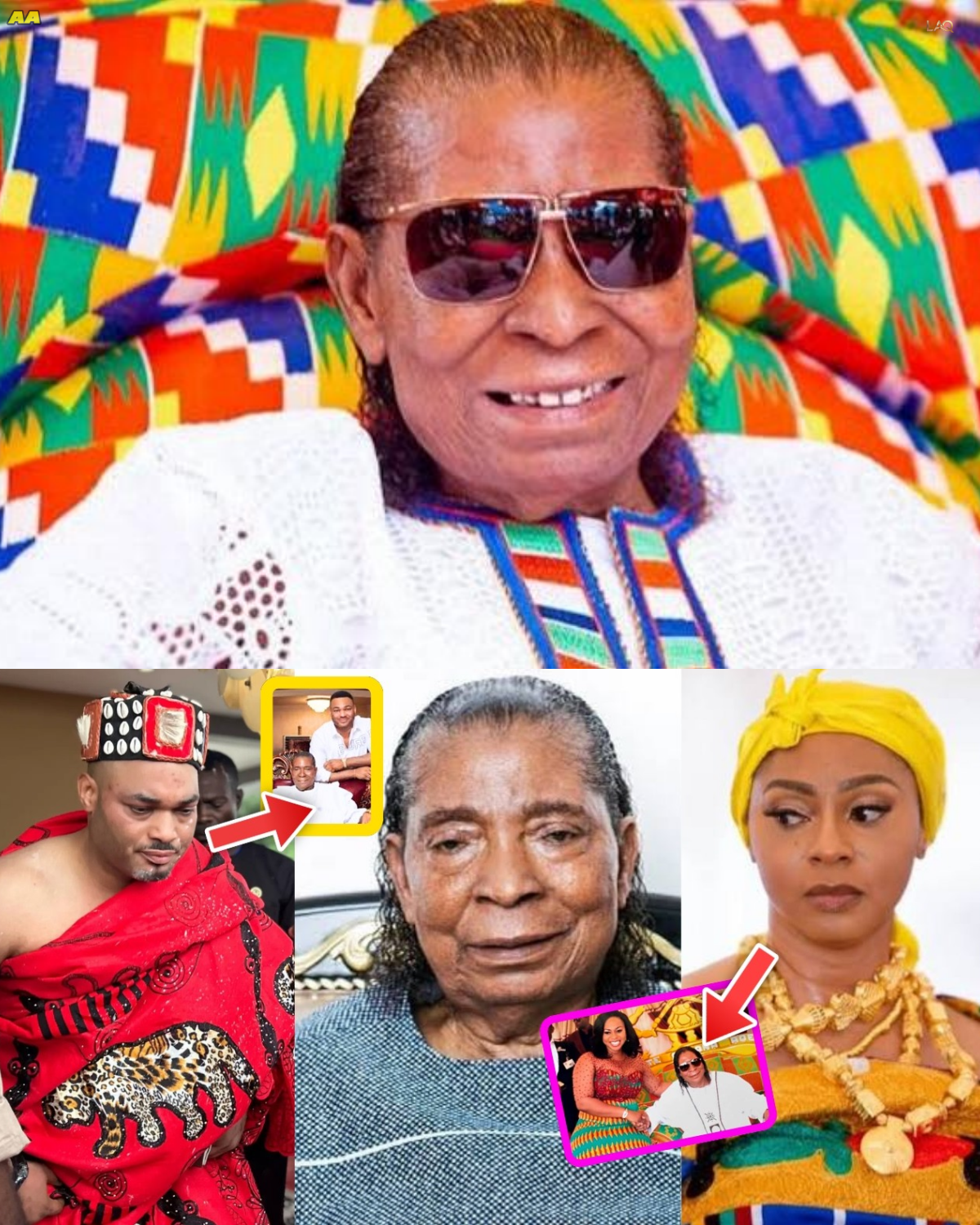
The Architect of Legacy: How One Man’s Final Will Reveals the Blueprint for Dynasty, Faith, and Unfinished Purpose

The reading of a will is rarely just a legal formality.
It is a moment when the dead speak through documents, when their priorities become crystallized in language, when the true measure of a life reveals itself not in eulogies but in the distribution of assets and the instructions left behind for the living.
The will of Apostle Dr. Kwadwo Safo Kantanka is no ordinary document.
It is a manifesto, a constitution for a dynasty, a theological statement wrapped in legal language, and a final assertion of control from a man who built an empire and now seeks to ensure that empire survives his death according to his precise specifications.
Kantanka was not merely a religious figure, though he was that.
He was an industrialist, a visionary, and a man who believed that spiritual authority and material accumulation were not contradictory but complementary.
His will reflects this worldview: it is a document that treats the church as a corporation, that views spiritual leadership as a hereditary right, and that seeks to bind future generations to the vision he established during his lifetime.
The document begins with a fundamental assertion: Akwasi Safo, known also as Aka or Israel, is designated as the supreme heir, the head of the family, and the leader of the Kristo Asafo Mission of Ghana.
This is not presented as a suggestion or a preference but as a directive, a command from beyond the grave.
All other children are instructed to respect, obey, and love Akwasi Safo as they would have loved their father, the founder, the patriarch.
What is striking about this provision is not merely the designation of a successor but the language used to frame it.
Kantanka is not simply passing on property or position; he is transferring paternal authority itself.
Akwasi Safo is to be treated as the father figure, which means that the other adult children are being placed in a subordinate position to their brother, a position that many would find difficult to accept.
This arrangement, while not uncommon in patriarchal societies, reveals something important about how Kantanka understood authority and succession.
He believed that leadership required hierarchy, that someone had to be unquestionably in charge, and that the alternative—shared leadership or democratic decision-making—would lead to chaos and the dissolution of what he had built.
The will then moves into the realm of corporate structure, detailing the vast holdings of the Kantanka empire.

The list is staggering in its scope: Kantanka Automobile Company Limited, Great Imperial Transport, Kantanka Mining and Quarry, Modern Kosa Company Limited, KSK Organic Farms, Kantanka Media Limited, Kantanka Security Services, Kantanka Herbal Pharmaceuticals, and numerous other enterprises.
These are not small businesses or side ventures; they represent a diversified industrial empire spanning multiple sectors of the Ghanaian economy.
The fact that Kantanka accumulated such wealth while also serving as a religious leader speaks to the particular character of prosperity gospel Christianity that has taken root in Ghana and across Africa.
In this theological framework, material success is not seen as a potential obstacle to spiritual authenticity but as evidence of God’s favor, as a sign that one is blessed and anointed.
Kantanka embodied this theology in his own life, and his will reflects the assumption that this theology will continue to guide his successors.
The distribution of these assets is where the will becomes particularly revealing.
Approximately sixty percent of the shares in key companies and associated bank accounts are being transferred to trusts or to the designated heir to be held in trust for the church and for research centers.
This arrangement means that the bulk of the wealth is not being distributed to individual family members for personal enrichment but is being retained under the control of the church and its leadership.
The remaining forty percent is presumably distributed among other family members, but the will does not provide a detailed breakdown of these distributions in the information available.
What is clear is that Kantanka has structured his estate in a way that ensures the church remains the primary beneficiary of his accumulated wealth, that the financial resources necessary to continue his work are secured, and that the leadership structure he has established will have the resources necessary to maintain it.

The real estate holdings are equally significant.
Large tracts of land—42 acres here, 31 acres there—along with various buildings and properties are transferred to Akwasi Safo to be held in trust for the church.
These are not small properties; they represent substantial wealth in real estate, the kind of holdings that could generate significant income through rental, development, or sale.
By placing these properties in trust rather than transferring them outright to individuals, Kantanka has ensured that they remain under the control of the church leadership and cannot be easily sold off or divided among competing heirs.
But perhaps the most revealing aspect of the will is the provision regarding future leadership succession.
Kantanka has decreed that only male descendants—sons and grandsons through the male line—can hold leadership positions in the Kristo Asafo Mission.
Grandsons through daughters are explicitly excluded, as are any members of the maternal family.
Furthermore, these male heirs must carry the name “Safo” to be eligible for leadership positions.
This provision reveals something crucial about Kantanka’s understanding of authority and legitimacy.
He is not merely passing on a business or an organization; he is establishing a dynasty, a family line that will be recognized as the legitimate carriers of his spiritual authority and his vision.
The requirement that heirs carry the name “Safo” is particularly significant; it is a way of marking them as belonging to the legitimate line, of distinguishing them from others who might claim authority based on other relationships or achievements.
This approach to succession is not unique to Kantanka, but it is increasingly controversial in contemporary Ghana, where questions about gender equality, meritocracy, and the proper basis for authority are being actively debated.
By explicitly excluding women and maternal descendants from leadership, Kantanka is making a statement about what he believes should determine who has the right to lead.

It is a statement rooted in traditional patriarchal values, in the belief that authority flows through the male line, and that women, while they may be valued and provided for, do not have the same claim to leadership as men.
The will also includes provisions regarding the care of children who bear Kantanka’s name.
Apparently, Kantanka took in children and had them named after him, a practice that reflects both his wealth and his sense of responsibility toward vulnerable children.
The will specifies that these children must continue to be cared for and their welfare ensured, placing this responsibility on the heir and the church leadership.
This provision reveals a more compassionate side of Kantanka, a recognition that wealth brings with it obligations to those who have been taken into one’s care.
The requirement that the research centers maintain at least thirty employees reflects Kantanka’s commitment to ongoing work and research, his belief that his legacy should not be merely preserved but actively continued.
By mandating minimum employment levels, he is ensuring that the infrastructure he built will continue to function, that the work he began will not be abandoned or allowed to atrophy.
Notably, Kantanka has requested that he not receive a state funeral, that there be no grand public ceremony to mark his passing.
This is an interesting choice for a man of such prominence and wealth, and it may reflect his awareness of the political dimensions of such ceremonies, his desire not to be co-opted by the state, or simply his personal preference for a more modest farewell.
The will, taken as a whole, presents a picture of a man who has thought carefully about how his legacy should be preserved and continued.
He has structured his estate in a way that prioritizes the continuation of his work over the enrichment of individual family members.
He has established clear lines of succession and authority to minimize the possibility of conflict and fragmentation after his death.
He has made provisions for the care of those who depend on him and for the continuation of the work he has begun.
Yet the will also reveals the limitations and potential problems with this approach to succession and legacy.

By concentrating so much power in the hands of a single heir, Kantanka has created a situation in which that heir will face enormous pressure and responsibility.
By excluding women and maternal descendants from leadership, he has ensured that a significant portion of his family will have limited say in how his legacy develops.
By tying leadership to the carrying of his name, he has created a system in which legitimacy is based on genealogy rather than merit or ability.
The comments on the video reveal how different people interpret Kantanka’s will.
Some see it as a model of wisdom and generosity, a demonstration of how a successful person should remember those who served him and ensure that his legacy continues.
Others focus on the provisions regarding the twelve adopted children or key staff members, seeing in the will evidence that Kantanka valued loyalty and service.
Still others note that Kantanka has been careful to protect his biological children from having to depend entirely on inherited wealth, requiring them to work for their own sustenance while ensuring they have a foundation to build upon.
What emerges from the will is a portrait of a man who understood power, who knew how to structure organizations to ensure they would survive his death, and who believed that his vision was important enough to be preserved and continued by future generations.
Whether his successors will have the wisdom to adapt his vision to changing circumstances, whether they will be able to maintain the unity and purpose he has established, whether the next generation will accept the authority structure he has put in place—these are questions that only time will answer.

What is certain is that Apostle Dr. Kwadwo Safo Kantanka has left behind not just wealth but a blueprint for how he believes his empire should function, a set of instructions for the living about how to honor his memory and continue his work.
In doing so, he has revealed not just his priorities but his deepest beliefs about authority, family, faith, and the proper relationship between spiritual power and material wealth.
His will is, in many ways, his final sermon, delivered not from a pulpit but through the language of legal documents, speaking to future generations about what he believed mattered most.
Disclaimer : This content may be created by AI for entertainment purposes. Any resemblance to real persons, events, or places is coincidental.
