The Fall of Sergeant 007: Fannie Nkosi’s Descent into Darkness

In a dramatic courtroom showdown that has captivated South Africa, Sergeant Fannie Nkosi, known as the “Cartel Cop,” has seen his bail appeal officially refused by the Pretoria High Court.
Judge Mokhine Mosopa delivered a crushing verdict that shattered Nkosi’s defense, leaving him to grapple with the consequences of his actions.
The once-mighty officer, who had walked the corridors of power with an air of invincibility, now finds himself behind bars, facing the stark reality of his choices.
The courtroom was charged with tension as the judge laid bare the facts of the case.
Nkosi had failed to explain the presence of an illegal stun grenade, a cache of ammunition, and large stacks of cash discovered hidden under his mattress.
The evidence was damning, and the judge’s words echoed through the chamber, sealing Nkosi’s fate.
The psychological collapse of a man who once believed he was untouchable unfolded before the eyes of the public, a tragic reminder of the fragility of power.
As the gavel struck, the implications of the ruling sent shockwaves through the legal community.
The National Prosecuting Authority (NPA) celebrated a significant victory, with regional spokesperson Lumka Mahanjana expressing confidence in the judicial system.
The fall of Sergeant 007 was not just a personal tragedy; it was a moment of reckoning for a system plagued by corruption and abuse of power.
Nkosi’s story is one of ambition and betrayal.
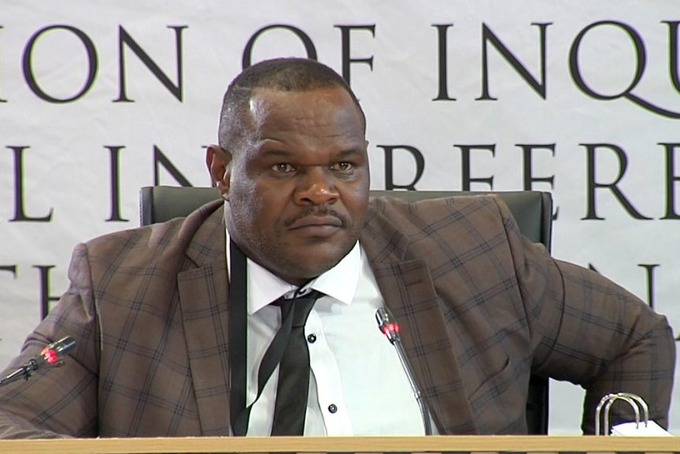
Once a decorated officer in the South African Police Service (SAPS), he had risen through the ranks, earning a reputation as a formidable figure in the Organized Crime Unit.
But beneath the surface lay a web of deceit, where loyalty was a commodity and betrayal lurked in every shadow.
The allure of power had blinded him to the consequences of his actions, leading him down a path of destruction.
As the court proceedings unfolded, the emotional turmoil within Nkosi became palpable.
The weight of his choices bore down on him, and the realization that he was now isolated from the very syndicate that once protected him was overwhelming.
The powerful figures he had once aligned himself with began to distance themselves, leaving him vulnerable and exposed.
The psychological impact of betrayal gnawed at him, and the walls of his world began to crumble.
The media frenzy surrounding the case intensified, with headlines screaming of corruption and scandal.
The public was captivated by the drama, eager to see how this high-stakes saga would unfold.
Nkosi’s downfall became a cautionary tale, a stark reminder of the dangers of unchecked ambition and the consequences of crossing the line.
As the trial date loomed closer, the stakes grew higher.

Nkosi faced a multi-provincial mega-trial set for July 16th, and the pressure mounted as he prepared to confront the evidence against him.
The psychological toll of the situation weighed heavily on him, and the fear of what lay ahead loomed like a dark cloud.
Would he be able to withstand the scrutiny, or would he crumble under the weight of his own actions?
In the days leading up to the trial, whispers of a potential plea deal began to circulate.
The prospect of singing to expose his senior generals became a tantalizing option for Nkosi, who found himself at a crossroads.
The reality of Kgosi Mampuru Prison set in, and the thought of spending years behind bars forced him to reconsider his loyalties.
The emotional struggle within him intensified as he grappled with the choice between self-preservation and loyalty to those who had once stood by him.
As the courtroom drama unfolded, the psychological battle between Nkosi and the NPA reached a fever pitch.
The prosecution was relentless, determined to dismantle the narrative Nkosi had built around himself.
The courtroom became a battleground, where the fight for justice clashed with the forces of corruption.
The emotional stakes were high, and the public watched with bated breath, eager to see who would emerge victorious.
In a stunning twist, the trial revealed the extent of the corruption that had permeated the SAPS.
Testimonies from former colleagues and associates painted a picture of a system riddled with betrayal and greed.
Nkosi’s role as a key player in this web of deceit became increasingly clear, and the public’s perception of him shifted from that of a hero to a villain.
The emotional fallout was profound, as the truth began to emerge from the shadows.
As the trial progressed, Nkosi found himself facing not only the legal ramifications of his actions but also the psychological impact of his choices.
The weight of the evidence against him became unbearable, and the realization that he had betrayed the very principles he once stood for struck him like a thunderbolt.
The fall from grace was complete, and the man who once held power now stood exposed and vulnerable.
The climax of the trial drew near, and the courtroom buzzed with anticipation.
Nkosi was given the opportunity to testify, a chance to confront the accusations head-on.
The emotional stakes soared as he prepared to take the stand, knowing that his words could determine his fate.
Would he choose to protect his former allies, or would he finally reveal the truth behind the corruption that had ensnared him?
In a heart-wrenching moment, Nkosi took the stand, his voice trembling as he recounted his journey from a respected officer to a man trapped in a web of deceit.
The audience listened intently as he laid bare his soul, revealing the struggles and temptations that had led him astray.
The emotional weight of his testimony resonated throughout the courtroom, leaving many in tears.
As the trial reached its conclusion, the verdict was delivered.
The judge ruled against Nkosi, sentencing him to years behind bars.
The emotional toll of the verdict was palpable, as the reality of his choices set in.
The fall of Sergeant 007 was not just a personal tragedy; it was a reflection of a system in crisis, a reminder that even those who wield power can be brought low by their own actions.
In the end, Fannie Nkosi’s story serves as a cautionary tale for all.
The allure of power can be intoxicating, but the consequences of betrayal and corruption are often devastating.
As he faces the reality of his sentence, the lessons learned from his downfall will resonate throughout South Africa, a stark reminder of the importance of integrity and accountability.
As the dust settles on this chapter, the fight for justice continues.
The story of Nkosi is a reminder that the pursuit of truth and accountability is a collective responsibility.
The echoes of his downfall will reverberate for years to come, shaping the future of law enforcement and governance in South Africa.
The journey toward redemption is long, but the resilience of the human spirit will ultimately prevail.
Disclaimer : This content may be created by AI for entertainment purposes. Any resemblance to real persons, events, or places is coincidental.
