When Earthquakes Shatter Lives: The Extraordinary Stories of Survival That Challenge Our Understanding of Fate
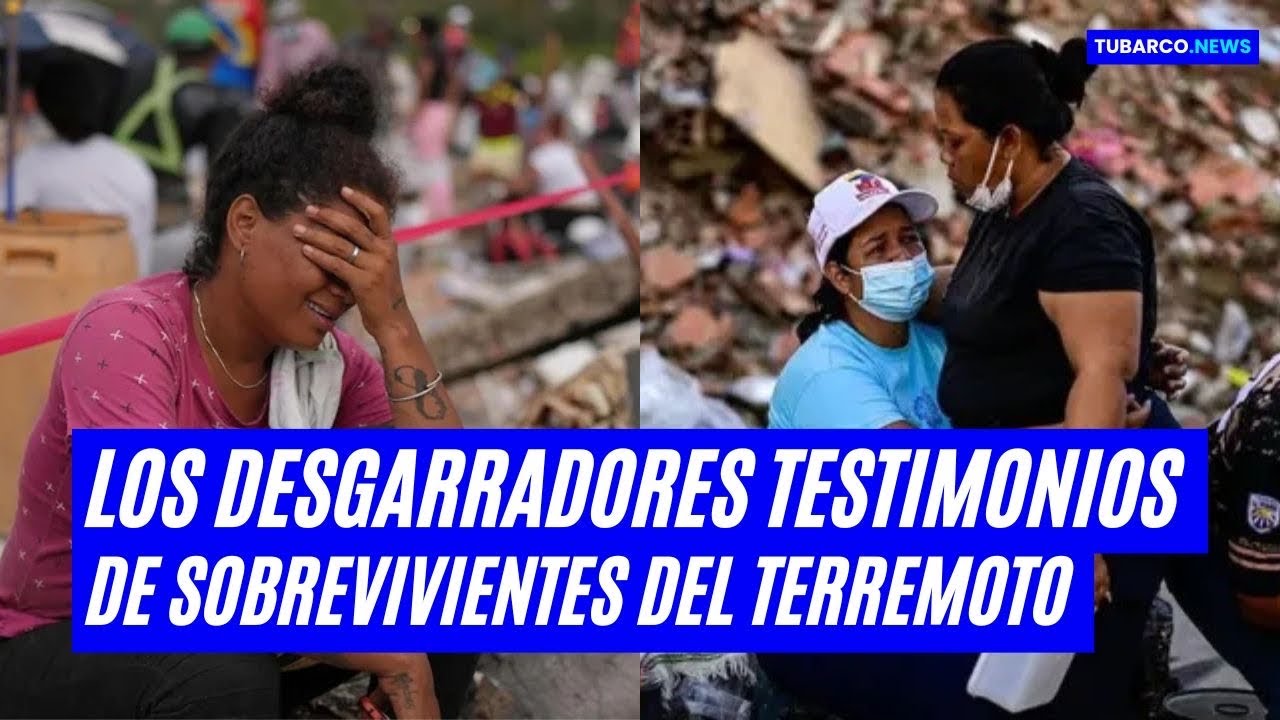
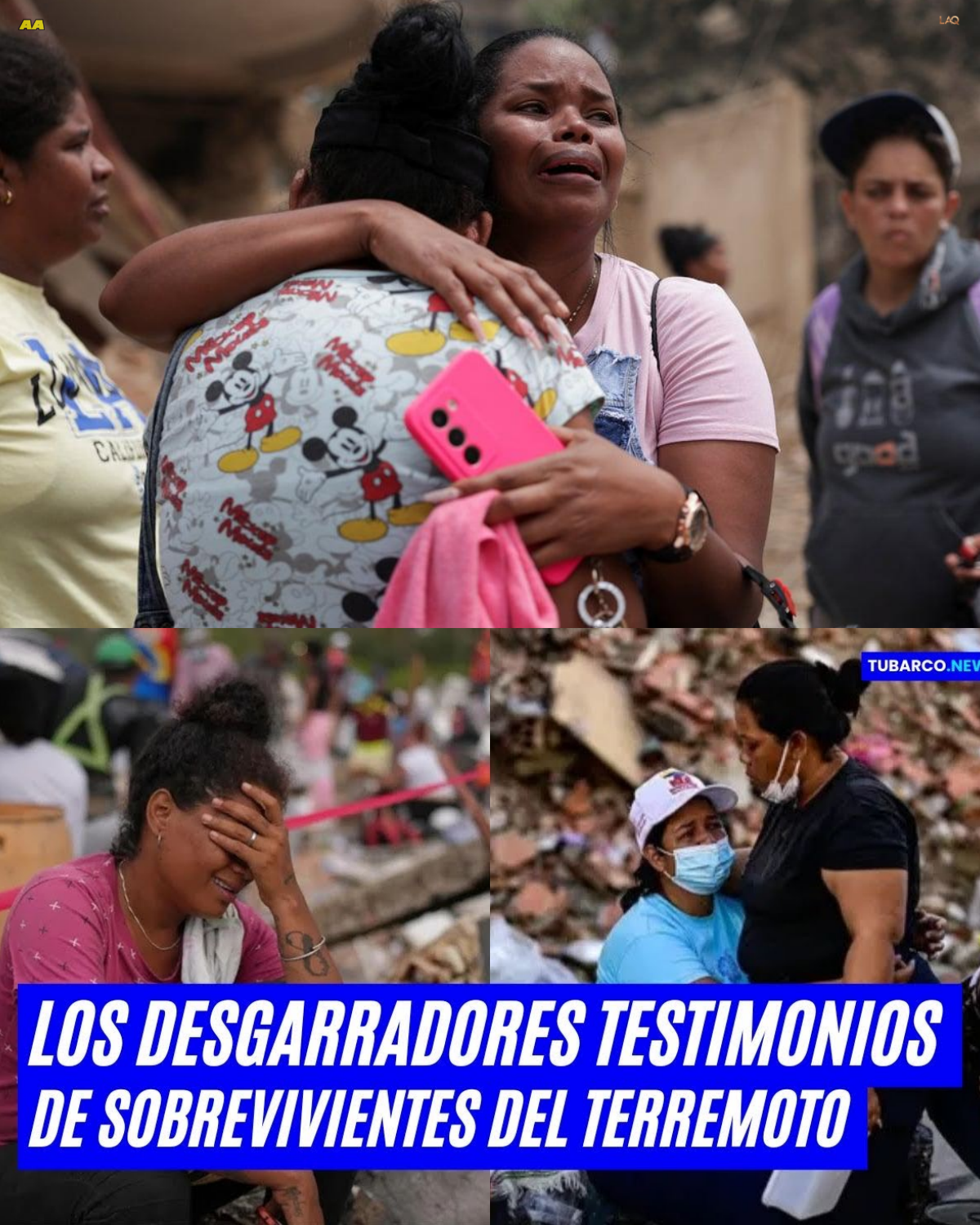
The ground beneath Venezuela trembled twice in rapid succession, and in those catastrophic moments, thousands of lives were forever altered. What emerged from the rubble, however, was not merely a collection of tragic losses, but rather a series of testimonies so profound and inexplicable that they force us to reconsider our understanding of human resilience, chance, and the mysterious forces that determine who survives and who does not. The documentary compiled by Periodismo Ciudadano Verificado captures these harrowing accounts with unflinching honesty, presenting narratives that oscillate between despair and hope, between the physical devastation of collapsed structures and the unbreakable spirit of those who endured.
Víctor’s eighteen-hour ordeal beneath the rubble of his fourth-floor apartment in Playa Grande represents one of the most visceral accounts of survival against impossible odds. When the first earthquake struck with violent intensity, he watched in real-time as his living space transformed into a nightmare landscape. The floor of his apartment split open into a massive crevasse, and the entire window system exploded outward in a shower of glass. In those final moments before everything collapsed, Víctor managed to shout words of love to his wife and family, unsure if those would be his last utterances. Then darkness consumed him as the building came down, followed almost immediately by a second, equally devastating tremor that seemed to mock any hope of survival.
What made Víctor’s situation particularly agonizing was not merely the physical entrapment, but the psychological torment of being conscious and aware while buried alive. He found himself wedged into a small pocket of space just large enough to breathe and move minimally, yet completely immobilized by the weight of concrete and debris surrounding him. For hours, he called out desperately to family members, hearing only the echo of his own voice returning to him through the darkness. The human mind, when faced with such circumstances, begins to play cruel tricks. Víctor found himself checking whether sand was filling his mouth by extending his tongue, a grotesque gesture born from the primal fear that suffocation might come before rescue. For eighteen hours, he remained in this state of suspended animation between life and death, until his uncle’s voice calling for a neighbor provided the breakthrough moment. Summoning every ounce of remaining strength, Víctor screamed upward, and miraculously, the rescue team heard him. They excavated a tunnel through the debris, and he emerged alive, forever marked by those eighteen hours in the abyss.

The story of the resilient woman rescued by El Salvador’s emergency response team presents a different but equally compelling narrative of survival. She was at home watching TikTok when both her phone and her sister’s phone simultaneously erupted with earthquake alerts. She had mere seconds to react before the building’s violent convulsion threw her toward the kitchen area. In that instant, she experienced what she could only describe as being sucked into the earth by a whirlwind, a sensation so overwhelming that it transcended ordinary language. When consciousness returned, she found herself in complete darkness, trapped in a deep hole surrounded by debris. Rather than succumb to panic, she began a desperate physical struggle, pushing against the materials around her, believing them to be wood that she might dislodge. More significantly, she turned to prayer, reciting between one hundred and two hundred Our Fathers in an attempt to maintain psychological equilibrium and preserve hope.
When a small shaft of light appeared from an opening above her, she recognized it as her lifeline. Using fragments of broken glass, she tapped out signals repeatedly, creating a rhythm of distress that eventually reached the ears of rescue workers from El Salvador’s emergency team. A plastic sheet was lowered, and she was urged to hold on and climb. Despite suffering severe lacerations across her back and legs that extended down her limbs, she demonstrated extraordinary courage, crawling inch by inch toward freedom. The moment she emerged into daylight, the assembled crowd erupted in applause, their spontaneous ovation a collective acknowledgment of human endurance in the face of nature’s indifference.
Perhaps the most philosophically profound testimony comes from a young mother who lost her thirty-four-year-old husband in the disaster. Faced with the responsibility of maintaining emotional stability for her young child despite her own devastating grief, she confronted a harsh new reality. When she returned to her destroyed home to assess what remained of her accumulated possessions, she experienced a jarring moment of clarity. Everything she had gathered over years of careful accumulation could now fit into two items: a passport, which represented the possibility of traveling abroad to reunite with her husband’s memory and family, and a work computer, which symbolized her ability to earn income online to support her child. She wore the bag containing her passport even while sleeping, ready to flee at any moment should aftershocks threaten her fragile sanctuary.

This mother’s experience led her to articulate a profound philosophy about material attachment and the nature of living fully. She recalled a handmade scented candle that she had treasured for years, so beautiful that she refused to burn it, always saving it for some perfect future moment that never arrived. The earthquake destroyed it, and in that destruction, she recognized a universal truth: life is happening now, not in some imagined perfect future. The disaster had inadvertently taught her that postponing joy, connection, and the enjoyment of beauty in anticipation of an ideal moment that may never come is perhaps the greatest tragedy of all, more devastating than any physical loss.
The account of a young boy named Omar C reveals how children process trauma through creative expression. He had asked his mother for permission to play hide-and-seek with his cousins when the earthquake struck. When his cousin entered his aunt Elena’s room, a painting fell and blocked the escape route. The entire structure of wooden beams and supports collapsed upon the boy, leaving him pinned face-down with his arms wrapped protectively around his head. To combat the overwhelming panic and pain, he employed an unexpected coping mechanism: he sang. Specifically, he sang a song by artist Omar C titled “Por si mañana no estoy” (If Tomorrow I Am Not Here), using music as a psychological anchor to maintain his sanity during the darkest hours before rescue arrived. The irony of a child singing a song about potential non-existence while trapped beneath rubble speaks to the mysterious ways human consciousness adapts to extreme trauma.
Perhaps the most medically inexplicable testimony involves a young girl whose broken leg seemingly healed itself through means that defy conventional orthopedic explanation. Her mother recounts the moment when a spiritual or inexplicable force caused a door to slam shut just as the family was attempting to escape their apartment. This door slamming caused them to fall directly downward through multiple levels. In desperate anguish, the mother clawed at the earth with her fingernails until she heard her children respond. Her son Jeremiah, with only forty-five percent battery remaining on his phone, discovered an air gap through which the family could breathe and eventually escape.

When the mother was carried to an ambulance holding her young daughter, multiple witnesses, including a journalist on scene, observed clearly that the girl’s leg bone was fractured and protruding visibly through the skin—a compound fracture of the most serious variety. Yet when the ambulance arrived at the hospital and orthopedic specialists conducted two separate X-ray examinations, they announced with medical certainty that the child’s leg was completely normal, showing no fractures, breaks, or abnormalities whatsoever. The medical team, the mother, and all present could only weep and express gratitude to God, confronted with a phenomenon that existing medical science could not adequately explain.
These testimonies collectively raise profound questions about the nature of survival, chance, and human capacity for endurance. They challenge us to consider whether survival is merely a matter of physical circumstance and luck, or whether something more complex operates in moments of extreme crisis. The documentary preserves these voices not as sensational entertainment, but as a crucial historical record of what Venezuela experienced and what ordinary people demonstrated about the human spirit when confronted with extraordinary adversity. Each survivor carries forward not only their physical scars but also the weight of inexplicable fortune, the knowledge that they lived while others did not, and the responsibility to ensure that their experiences are remembered and their stories continue to resonate with meaning long after the earthquakes have stopped shaking the earth.
Disclaimer : This content may be created by AI for entertainment purposes. Any resemblance to real persons, events, or places is coincidental.
